Solving Multiple Inheritance
Java allows only one parent class, so interfaces let a class take on more than one set of abilities without the problems of multiple inheritance.
Journeyman · Java · OOP · Updated
An interface is like a 100% abstract class. So, if interfaces are just special classes, why do we need them?
Many OOP languages that do not support interfaces allow child classes to inherit from multiple parent classes.
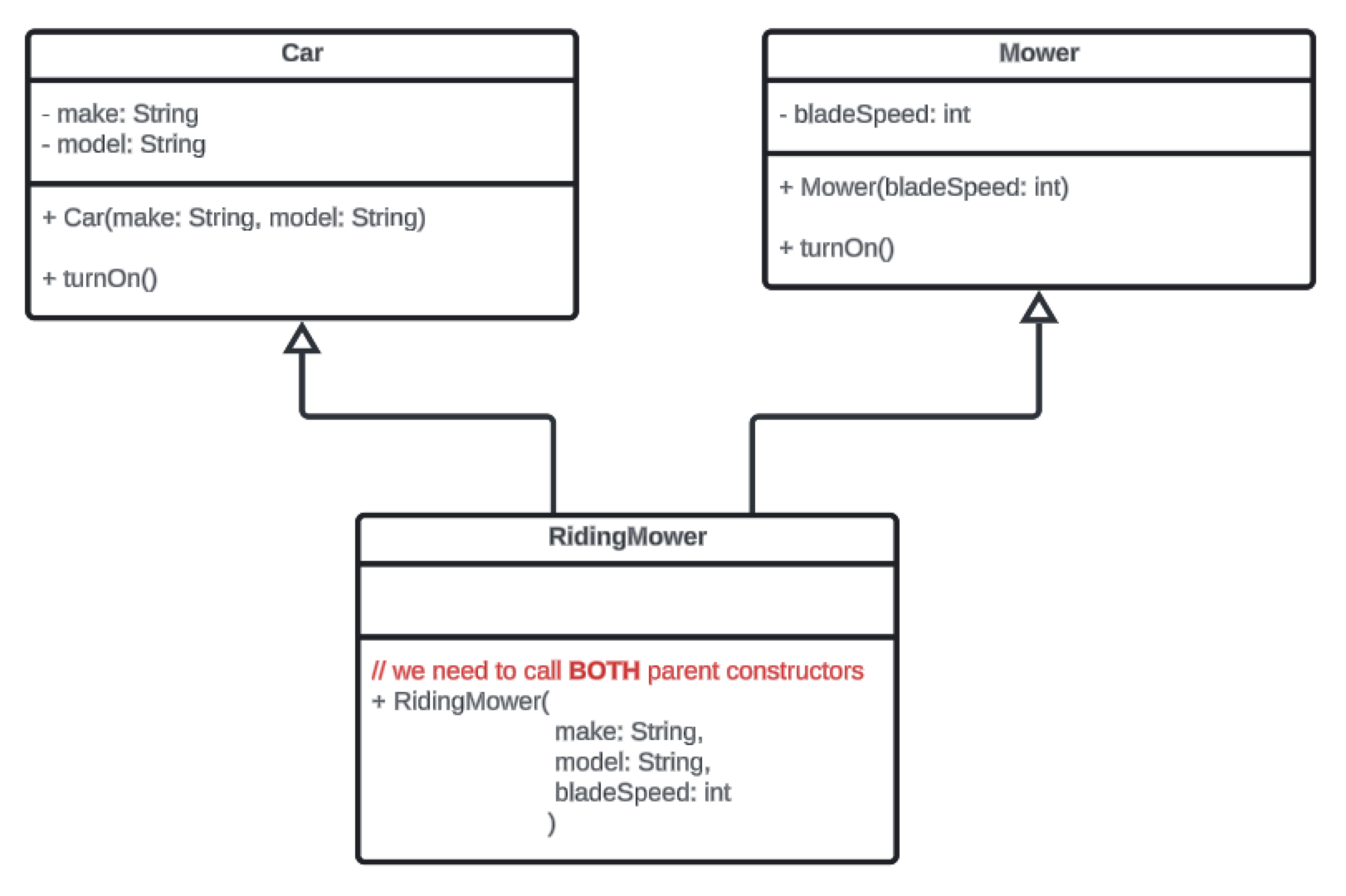
This can lead to unexpected coding challenges that you now have to deal with. For instance, if you create a riding mower and then turn it on, which parent turnOn() method should be called, or should they both be called?
RidingMower lawnRider = new RidingMower("Meadow Pro","5500",500);
lawnRider.turnOn();
Because this challenge of dealing with multiple inheritance often resulted in buggy code, a pattern that emerged in OOP was that developers would create one primary parent class from which a child could inherit variables and methods. Then, if a class needed to inherit from another class, additional parents would be designed as fully abstract classes. This way, potential method naming collisions could be avoided.
Java took this approach one step further. In Java, and in several other modern OOP languages, it is illegal to extend more than one parent class.
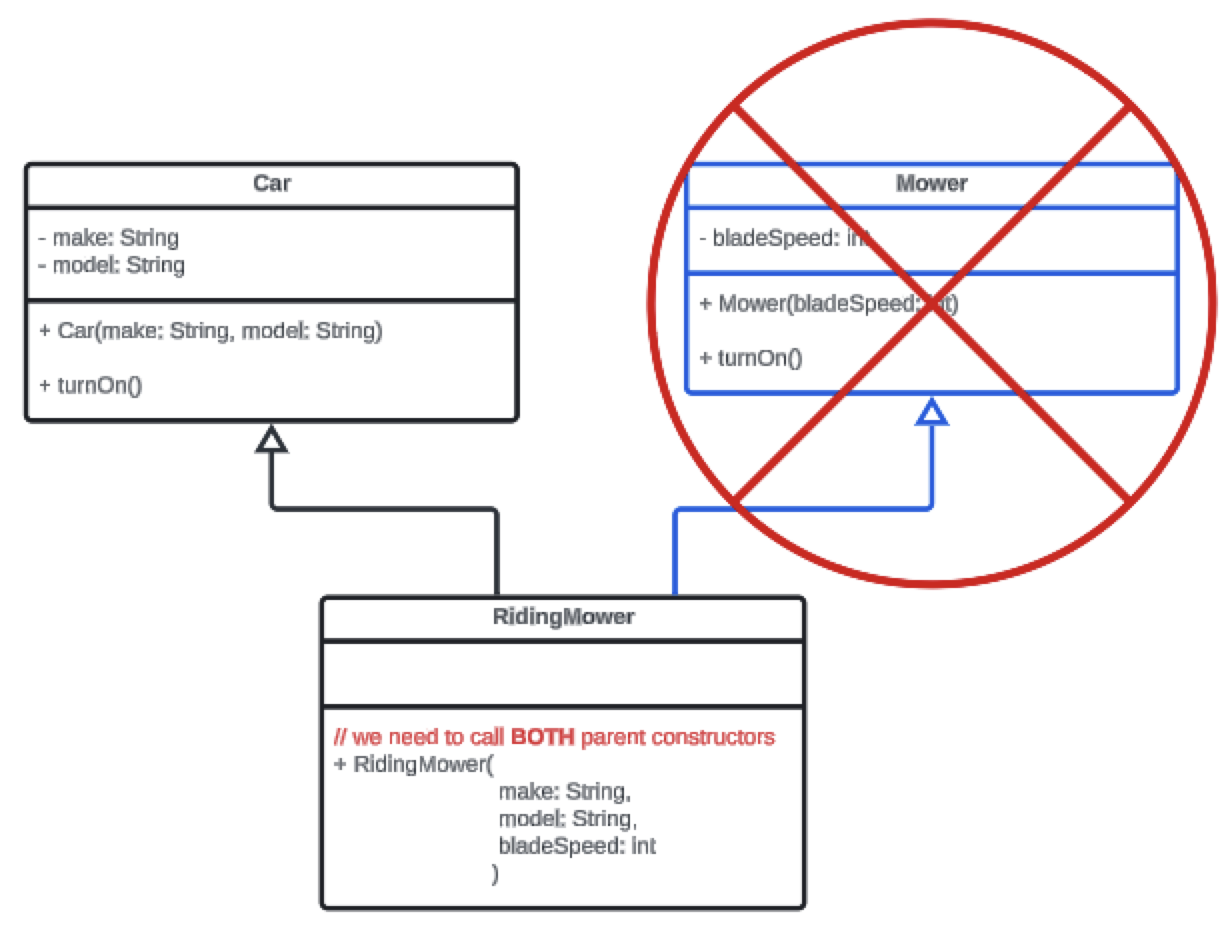
Adding Interfaces
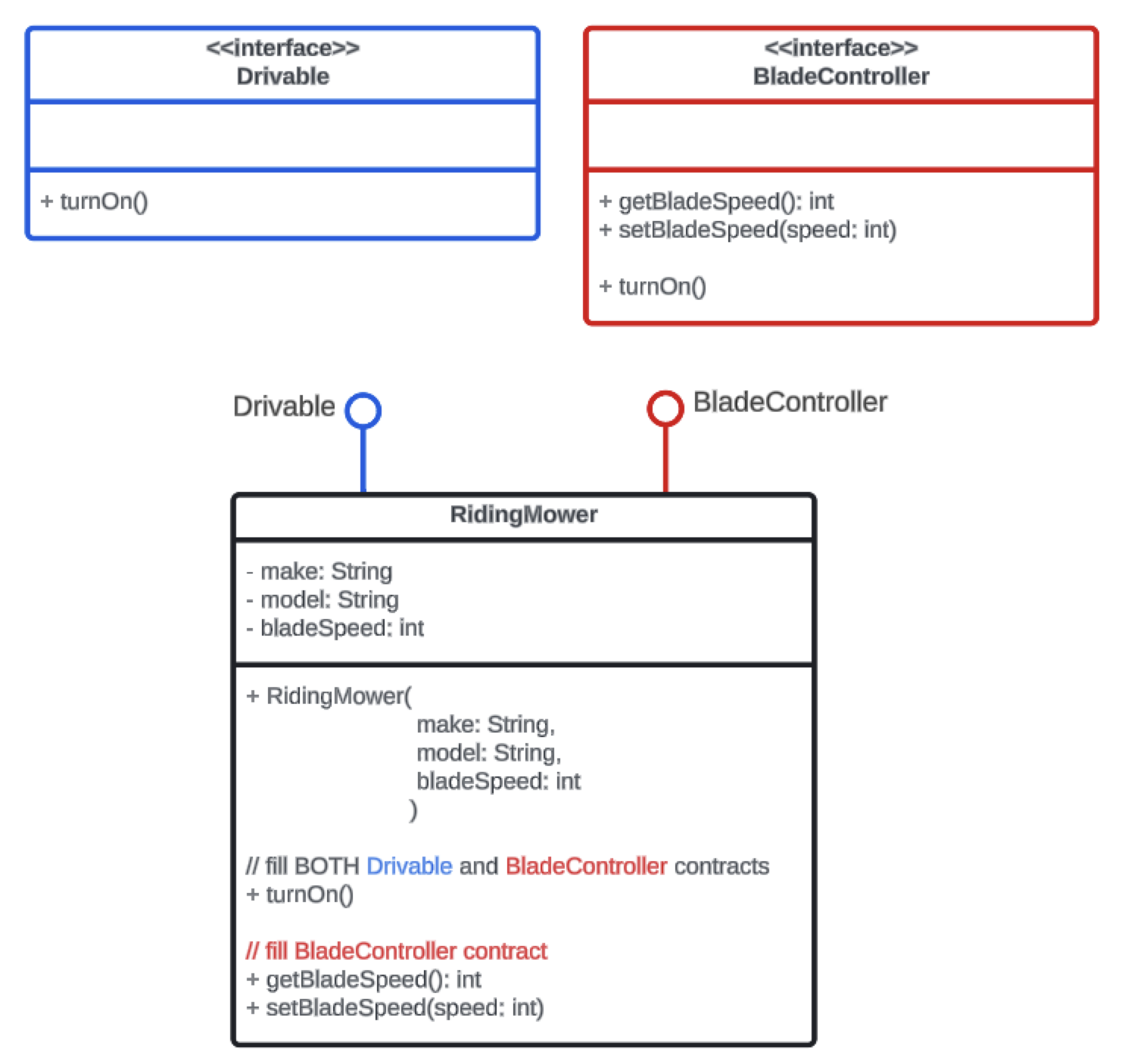
Java only allows you to inherit from a single class, but, you can implement as many interfaces as you need. By introducing the interface construct, Java ensured that the additional "inherited classes" would be 100% abstract.
Do it: one turnOn for two interfaces
The riding mower is set up the Java way: one parent class, Machine, which gives it its make, and two interfaces after it, Drivable and BladeController. Both interfaces ask for a turnOn() method. The starter doesn't compile yet: Java says RidingMower doesn't write the interfaces' methods. Your job is to write them.
The two interfaces are given at the bottom of the file (the next lesson shows how to write your own):
Drivableasks forString turnOn()andString steer(String direction).BladeControllerasks forString turnOn().
A class keeps an interface's contract by writing each of its methods as an ordinary public method, with the same name, parameters and return type.
For example, a Meadow Pro mower:
RidingMower mower = new RidingMower("Meadow Pro");
| Call | Returns |
|---|---|
mower.turnOn() |
"Meadow Pro is running" |
mower.steer("left") |
"Turning left" |
Your job: write the methods the two interfaces ask for in RidingMower.
- Write one
public String turnOn(). It returns the mower's make, then" is running". That one method keeps both interfaces' contracts. - Write
public String steer(String direction). It returns"Turning ", then the direction. - Leave
Machine, the two interfaces andRidingMower's first line as they are.
Practiced live on the lesson page: write the Java right there and check it.