Stacks
A Stack<T> hands values back newest first, last in, first out. Push adds to the top, Pop takes from the top, and Peek looks without taking. Undo is the classic use.
Journeyman · C# · Updated
After this lesson you can
- Use a Stack<T> for last-in, first-out work, with Push, Pop and Peek
- Choose between a queue and a stack for a job
Key takeaways
- A
Stack<T>is last in, first out (LIFO): values come back newest first, the reverse of the order they went in. Pushadds to the top,Popremoves and returns the top, andPeekreturns the top without removing it.PopandPeekon an empty stack throw anInvalidOperationException, so checkCountfirst or useTryPop.- Undo is the classic stack. Push the state before each change, and pop the most recent one to go back a step.
- Use a queue when the oldest should be handled first, and a stack when the newest should.
A Stack<T> works like a stack of plates: you put a plate on the top, and you take a plate from the top. The last plate added is the first one taken: last in, first out, or LIFO.
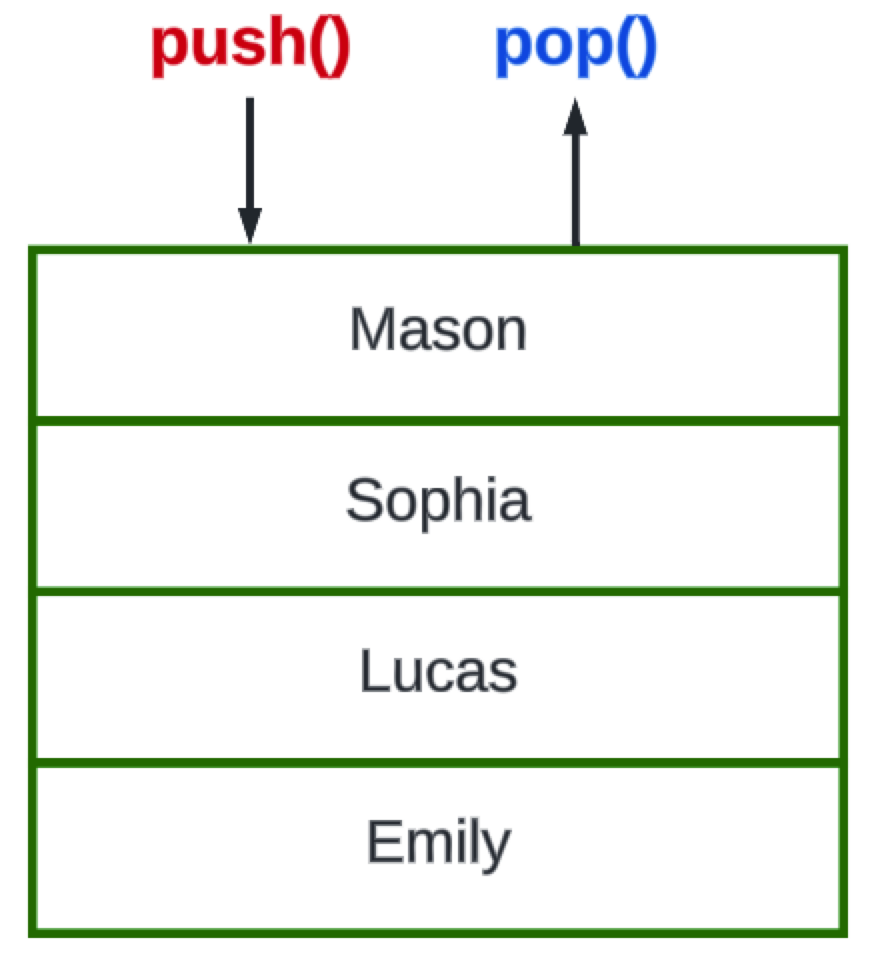
Push and Pop
Stack<string> plates = new Stack<string>();
plates.Push("Emily");
plates.Push("Lucas");
plates.Push("Sophia");
plates.Push("Mason");
Console.WriteLine(On top: Mason
Mason
Sophia
Lucas
Emily
The values came out in the reverse of the order they went in.
| Member | Does |
|---|---|
Push(value) |
Puts the value on top |
Pop() |
Removes the value on top, and returns it |
Peek() |
Returns the value on top, without removing it |
Count |
How many values are on the stack |
TryPop(out value) |
Like Pop, but returns false instead of failing when the stack is empty |
Like a queue, Pop() and Peek() on an empty stack throw an InvalidOperationException, so check Count or use TryPop.
Undo
The classic use of a stack is undo. Every change is pushed; undo pops the most recent one:
Stack<string> history = new Stack<string>();
string text = "";

Type("Hello");
Type(", world");
Type("!!!");
Console.WriteLine(text);

Undo();
Console.WriteLine(text);
Undo();
Console.WriteLine(text);

void Type(string words)
{
    history.Push(text);
    text += words;
}

void Undo()
{
    if (history.TryPop(out string? previous))
    {
        text = previous;
    }
}
Hello, world!!!
Hello, world
Hello
Each Type pushes the text as it was before the change. Undo pops the most recent one and puts it back, so changes come off in the reverse of the order they were made. The Back button in a browser works the same way.
Queue or stack?
| Question | Use |
|---|---|
| Should the oldest be handled first? | A queue (FIFO): a line, a waiting list, orders to make |
| Should the newest be handled first? | A stack (LIFO): undo, the browser's Back button, a pile of plates |
Do it: a Back button for the café's website
The café's website has a Back button. It takes you to the page you were on before; press it again, and it goes one more page back. The most recent page comes back first, so it's a stack.
Browser already has:
history: aStack<string>of the pages you've left, empty at first.Current: the page you're on, astring,"Home"at first.
Visit gets one value:
page: the name of the page to go to, astring("Menu").
For example:
Browser browser = new Browser();
browser.Visit("Menu");
browser.Visit("Desserts");
browser.Visit("Cakes");
browser.Back();
browser.Back();
| Step | Current after it |
history, top first |
|---|---|---|
| Start | Home | (empty) |
Visit("Menu") |
Menu | Home |
Visit("Desserts") |
Desserts | Menu, Home |
Visit("Cakes") |
Cakes | Desserts, Menu, Home |
Back() |
Desserts | Menu, Home |
Back() |
Menu | Home |
So browser.Current is "Menu".
Your job: write the two methods of the class Browser.
Visit(string page): push the page you're on ontohistory, then makepagethe current page.Back(): take the most recent page offhistory, and make it the current page.- When
historyis empty,Back()does nothing: you stay on the page you're on, with no error.
Practiced live on the lesson page: write the C# right there and check it.
Check yourself
2 questions to try on the lesson page.
So what
A stack remembers in reverse: whatever happened last comes back first. Whenever you need to go back step by step, through edits, pages or moves in a game, a stack does the remembering.