DELETE
Handle a DELETE request with @DeleteMapping, taking the category's id from the URL, and answer 204 No Content.
Journeyman · Spring Boot · REST API · Updated
Deleting a record should be done through a DELETE request. When a client DELETEs a record - the id should be included in the URL
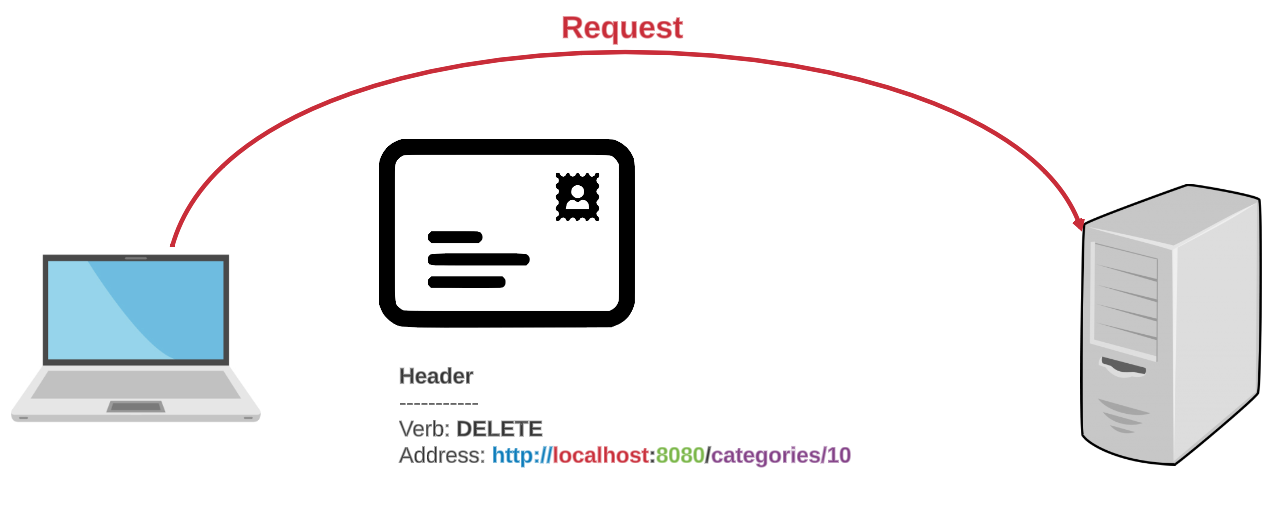
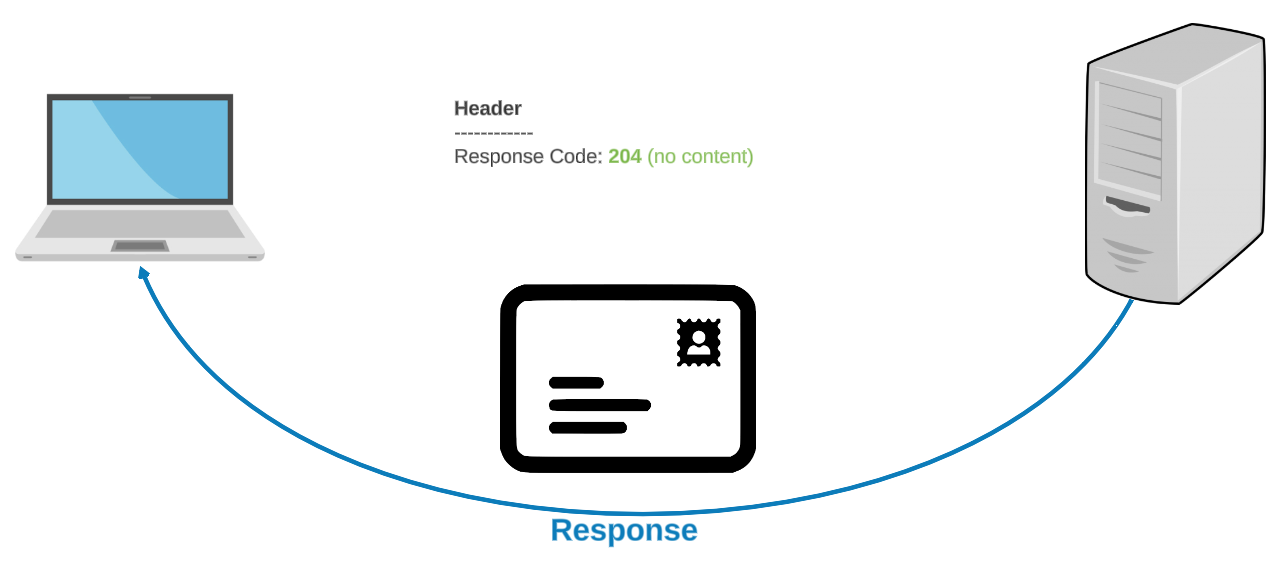
The server will delete the data, then it will return a status of no content (204).
DELETE Request - Client
In Insomnia, this is your Delete Snacks request from Insomnia: DELETE, with no body:
DELETE {{ _.base_url }}/api/categories/10
DELETE Request - Server
The method responsible for handling the request must be marked with a @DeleteMapping annotation to handle the request. The id of the resource must be marked as a @PathVariable. The @ResponseStatus annotation specifies the status code that will be returned (HttpStatus.NO_CONTENT returns a status of 204)
@DeleteMapping(path="/api/categories/{id}")
@ResponseStatus(value = HttpStatus.NO_CONTENT)
public void deleteCategory(@PathVariable int id)
{
    // the DAO deletes the row; nothing is returned
    categoryDao.delete(id);
}
DELETE Response - Client
Add the method to your controller and the delete method to your DAO, run the app again, and send Delete Snacks. The 405 Method Not Allowed from Insomnia: DELETE is now 204 No Content, and the body is empty. Then send All categories: category 10 is gone from the list.
Do it: delete a category from a list, the way the DAO does
The DELETE method asks the DAO to delete the category with the address's id, and answers 204 either way. Write that delete for a list of categories instead of a database.
Category is given at the bottom of the file, with getCategoryId() and getCategoryName().
The method gets two values:
categories: the saved categories, aList<Category>.id: the id from the address, anint, such as10fromDELETE /api/categories/10.
For example, the list holds Beverages (1), Seafood (8) and Snacks (10), and a client sends DELETE /api/categories/10:
| Step | Here |
|---|---|
| Find the category whose id is 10 | Snacks, at index 2 |
| Remove it | 1 removed |
| The list now holds | Beverages and Seafood |
So after delete(categories, 10), the list holds Beverages and Seafood.
Your job: write the method delete(List<Category> categories, int id). It returns nothing (void): it changes the list.
- Remove the category whose id is
idfrom the list. - Leave the other categories in their order.
- When no category has that id, leave the list as it is: deleting something that isn't there is not an error, as the API's second
204shows.
Practiced live on the lesson page: write the Java right there and check it.